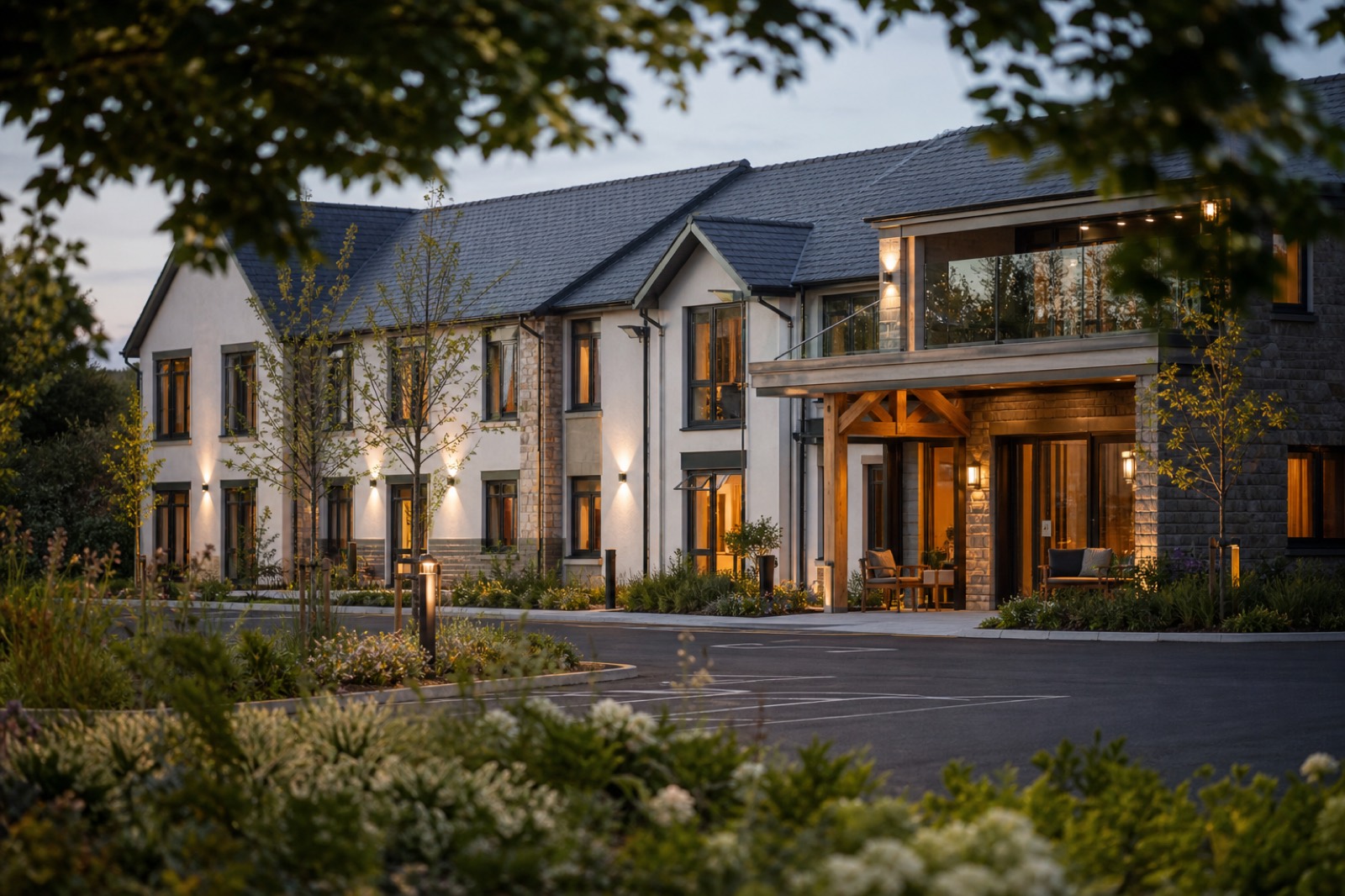
Care home development finance
Funding for elderly-care and supported-living schemes across the UK.

Funding care homes development
Care home development is an operationally-led asset class. An ageing population underpins long-term demand for modern, en-suite, purpose-built bed stock, and a large part of the existing estate is dated and falling out of registration. That gives well-located new schemes a strong demand picture. Lenders, however, underwrite the operator as closely as the bricks: the strength of the care operator, its CQC standing and its ability to fill beds at the assumed fees are central to the credit.
We arrange funding for ground-up purpose-built care homes, supported-living and specialist-care schemes, usually structured around an operator agreement or a sale to a care provider on completion. Leverage reflects both the build cost and the operational covenant. A scheme with an experienced operator, a clear registration path and demonstrable local bed demand attracts the strongest terms.
Scheme types we fund
- Purpose-built elderly-care homes
- Nursing and dementia-care schemes
- Supported-living and specialist-care developments
- Operator-backed and pre-sold schemes
Indicative terms
- Loan to costUp to 65 to 70% senior
- Loan to GDVUp to 60%
- Key testsOperator covenant, CQC, bed demand
- ExitOperator lease or sale to a provider
Indicative only. Terms vary by lender, scheme and borrower and are not an offer of finance.
How we fund a care home scheme
Care homes are funded on senior development finance against cost, with leverage shaped by the operator covenant and the registered, stabilised value rather than bricks alone. Where an operator has agreed a lease or a provider has agreed to buy the completed home, that covenant supports higher leverage. Mezzanine can top up the structure on strong schemes, and the build is released in stages as with any development facility.
Lender appetite for care homes
A specialist field of banks and debt funds backs care home development, and they underwrite the operator as much as the asset. Appetite is strongest where an experienced operator with sound CQC standing is committed under a lease or forward agreement, and where local demographics show clear bed demand against dated competing stock. Speculative schemes without an operator are far harder to fund.
The exit
The exit is usually a sale of the operating home to a care provider or healthcare investor, or a refinance onto longer-term investment debt once the home is registered and trading toward stabilised occupancy. Because occupancy builds over the months after opening, a stabilisation loan often bridges the home from registration to stabilised trading before that exit. A forward sale to a provider gives lenders the clearest exit and the best terms.
Finance structures that suit this sector
- Senior development financeCore facility, leverage set by operator covenant.
- Stretch senior financeHigher leverage where an operator lease is agreed.
- Mezzanine financeTops up leverage on operator-backed schemes.
- JV equityFunds equity on multi-home or rollout programmes.
- Stabilisation financeBridges the home from registration to stabilised occupancy.
Fund a care homes scheme
A view on fundability within one working day.
How a care home's numbers stack up
Care home value is operationally led: it rests on registered bed capacity, achievable weekly fees and the stabilised EBITDA an operator can deliver, capitalised at a care-specific yield. Lenders model value from the operator's business plan, weigh CQC standing and local bed demand, and look for a margin that holds against a slower fill or fee pressure.
Indicative care home finance rates and leverage
We arrange senior development finance for care homes to 65 to 70 percent of cost and around 60 percent of the registered, stabilised value, with leverage shaped by the operator covenant. A stabilisation facility then bridges the home from registration to stabilised occupancy before a term refinance or sale to a provider.
Frequently asked questions
Do I need an operator in place to fund a care home?
It greatly helps. Lenders underwrite the operator's covenant and CQC standing alongside the build, so an agreement with an experienced operator, or a pre-sale to a care provider, materially improves the terms and leverage available.
How is care home demand assessed?
On the local supply of modern, en-suite, registered beds against the ageing population in the catchment, plus the fee levels the operator can achieve. Areas with dated stock and strong demographics show the clearest need.
Can a developer without care experience fund a home?
Yes, where an experienced operator is committed to run or buy the home. The operator's covenant carries much of the credit, so a strong operator partner can offset a developer's lack of sector-specific experience.
How much can I borrow for a care home development?
Senior debt typically funds 65 to 70 percent of cost, capped around 60 percent of the registered stabilised value, with mezzanine lifting leverage where the operator covenant is strong.
Funding a care homes scheme?
Tell us about your development and we will come back with a view on fundability and likely terms.