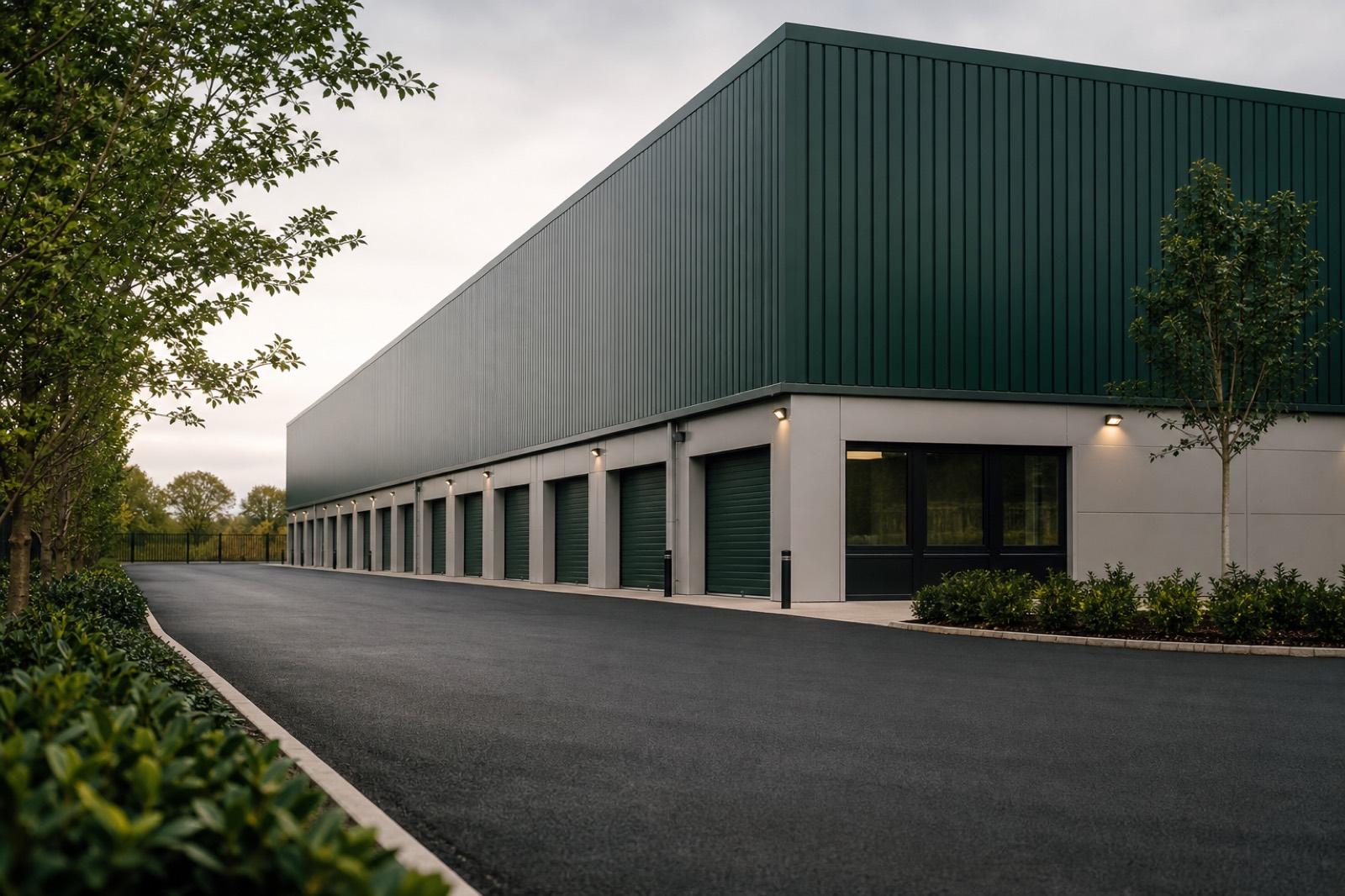
Self-storage development finance
Funding for purpose-built self-storage facilities across the UK.

Funding self-storage development
Self-storage is a maturing UK asset class with resilient demand and strong investor interest. It is an operationally-led format, so lenders underwrite the operator, the catchment population and the lease-up projection: how quickly the facility is expected to fill and at what occupancy and rate it stabilises. Schemes in dense urban catchments with limited existing provision show the clearest demand.
We arrange finance for purpose-built self-storage facilities and conversions of suitable industrial buildings, structured around the development cost and the projected stabilised income. An experienced operator and a strong catchment underpin the most competitive terms.
Scheme types we fund
- Purpose-built self-storage facilities
- Industrial-to-storage conversions
- Operator-backed and managed schemes
- Urban-infill storage developments
Indicative terms
- Loan to costUp to 65% senior
- Loan to GDVUp to 60%
- Key testsOperator, catchment, lease-up
- ExitStabilised refinance or sale
Indicative only. Terms vary by lender, scheme and borrower and are not an offer of finance.
How we fund a self-storage scheme
Self-storage is funded on senior development finance against build cost and the projected stabilised value, with mezzanine available where the catchment and operator support higher leverage. Because income builds over a lease-up period rather than arriving on completion, lenders size the facility on the projected stabilised income and usually expect an interest reserve to cover the fill period. An experienced operator shortens the assumed lease-up and improves the terms.
Lender appetite for self-storage
A growing field of banks and debt funds backs self-storage, drawn by the sector's resilience and investor demand. Appetite is strongest for schemes in dense urban catchments with limited competing provision and an experienced operator behind the lease-up. Lenders focus on the realism of the fill projection, so a credible operator and a proven catchment are central to securing competitive leverage.
The exit
The exit is a refinance onto investment debt once the facility stabilises, or a sale to a storage operator or income investor. Because storage leases up gradually rather than on completion, a stabilisation loan typically bridges the facility from opening through lease-up to stabilised occupancy, before that term refinance or sale repays it.
Finance structures that suit this sector
- Senior development financeCore facility against cost and stabilised value.
- Stretch senior financeHigher leverage where the catchment is strong.
- Mezzanine financeTops up leverage on operator-backed schemes.
- Stabilisation financeFunds the facility through lease-up to stabilised occupancy.
Fund a self-storage scheme
A view on fundability within one working day.
What drives self-storage economics
Self-storage value is built from projected stabilised occupancy and rate across the catchment, capitalised at a sector yield, with the lease-up curve central to the model. Lenders weigh the operator, the catchment population and competing provision, and look for a fill projection robust enough that the stabilised income comfortably covers the debt.
Indicative self-storage finance rates and leverage
We arrange senior development finance for self-storage to around 65 percent of cost and 60 percent of the projected stabilised value, usually with an interest reserve covering the fill period. A stabilisation facility then bridges lease-up to stabilised occupancy before a term refinance or sale.
Frequently asked questions
How is self-storage underwritten?
On the operator, the catchment population and the lease-up projection. Lenders want to see a credible path to stabilised occupancy and rate, ideally with an experienced operator and limited competing provision in the catchment.
Can I convert an industrial building to self-storage?
Often, yes. Suitable industrial buildings convert well to storage, and lenders fund both ground-up and conversion schemes on similar tests, sized against the projected stabilised income.
Why do self-storage lenders ask for an interest reserve?
Because storage income builds over a lease-up period rather than arriving on completion. An interest reserve covers the finance cost during the fill period until the facility generates enough income to service the debt.
Does an experienced operator improve the terms?
Yes. An experienced operator shortens the assumed lease-up and gives lenders confidence in the fill projection, which improves both the leverage and the pricing available.
Funding a self-storage scheme?
Tell us about your development and we will come back with a view on fundability and likely terms.