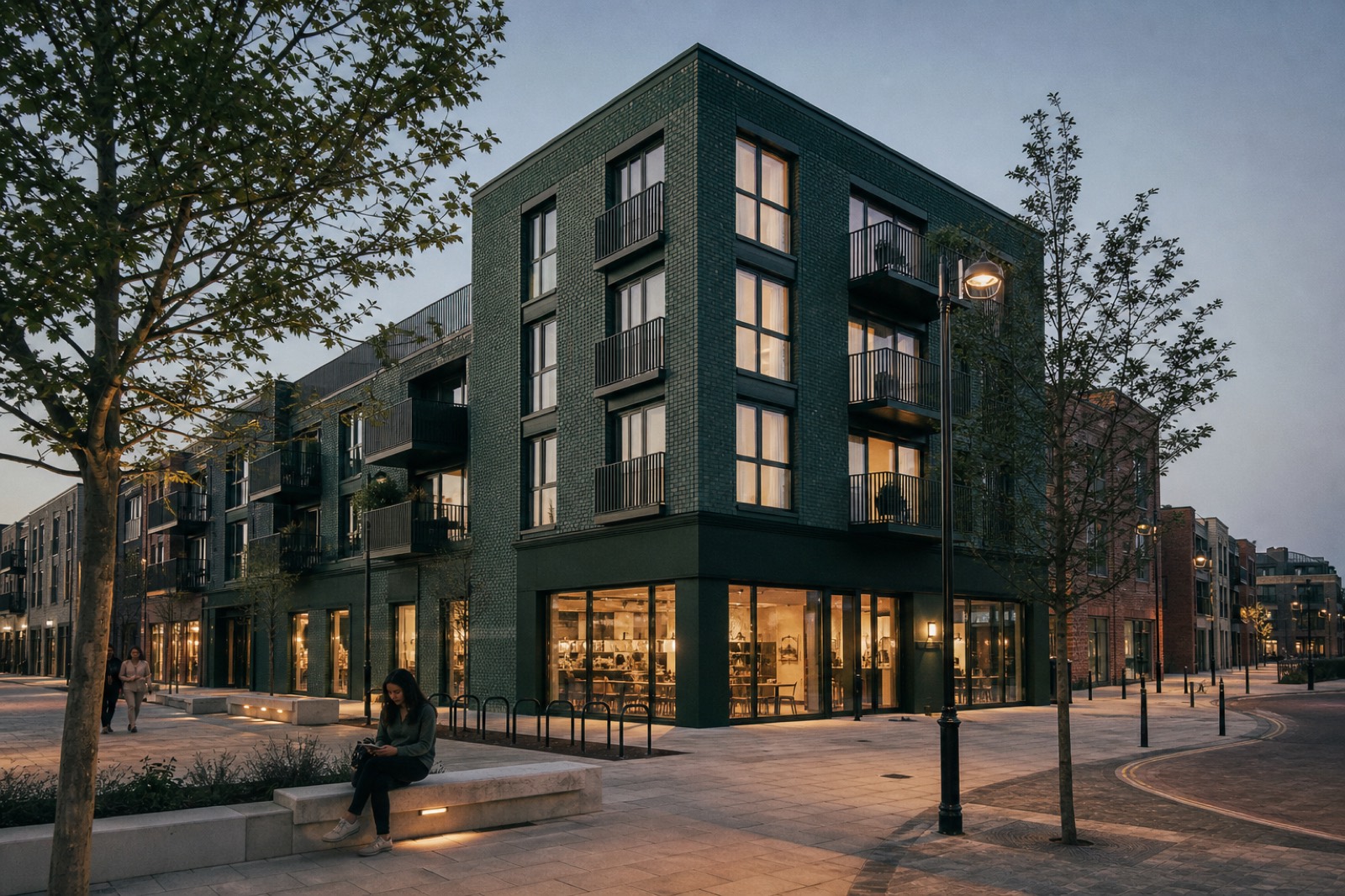
Mixed-use development finance
Funding for commercial-led schemes blending residential, retail, office and leisure.

Funding mixed-use development
Mixed-use development blends two or more uses on a single site, typically commercial at ground level with residential, office or leisure above. It is the dominant form of town-centre regeneration, because it spreads risk across uses and creates places rather than single-use buildings. The complexity, multiple income streams, phasing and a layered planning consent, means lenders underwrite mixed-use schemes carefully, but a well-conceived scheme in a regenerating location is highly fundable.
We arrange finance across the capital structure for mixed-use schemes, often combining senior debt with mezzanine or JV equity given the scale of many projects. The funding is shaped around the phasing and the blended exit, which may mix residential sales, commercial lettings and an institutional sale of the investment element.
Scheme types we fund
- Commercial-led town-centre regeneration
- Residential-over-retail schemes
- Office, residential and leisure blends
- Phased masterplan developments
Indicative terms
- Loan to costUp to 65% senior
- Loan to GDVUp to 60%
- Key testsPhasing, blended exit, planning, demand
- StructureOften senior plus mezzanine or JV equity
Indicative only. Terms vary by lender, scheme and borrower and are not an offer of finance.
How we fund a mixed-use scheme
Mixed-use development is funded on senior debt sized across the blended scheme, with the facility structured around the phasing and the multiple exits. Because residential elements may sell while commercial elements let and sell to a fund, lenders model each income stream and its timing. Larger schemes commonly combine senior debt with mezzanine or JV equity, and drawdowns and repayments are tailored to the build programme.
Lender appetite for mixed-use
Appetite exists across banks, debt funds and specialist development lenders, but the underwriting is careful given the complexity. Lenders favour schemes with a clear phasing plan, defensible demand for each use, and a credible blended exit. A strong residential market for the upper floors and pre-lets on the commercial element materially improve the field of lenders and the leverage.
The exit
The exit is blended: residential elements typically sell unit by unit or through a build-to-rent or investment sale, while the commercial element lets and sells to an income investor. Development exit finance often plays a role, refinancing completed phases onto cheaper money while later phases and sales complete.
Finance structures that suit this sector
- Senior development financeCore facility across the blended scheme.
- Stretch senior financeHigher leverage on well-conceived schemes.
- Mezzanine financeCommon on larger phased developments.
- JV equityFunds the equity on major regeneration.
Fund a mixed-use scheme
A view on fundability within one working day.
How a mixed-use scheme is modelled
Mixed-use value is the sum of distinct income streams, residential sales plus commercial lettings, each modelled and timed separately across the scheme's phasing. Lenders build a blended GDV, test each use against its own market, and look for a margin and a phasing plan that hold if one use lets or sells more slowly than the others.
Indicative mixed-use finance rates and leverage
Senior development finance for mixed-use is typically sized to 65 percent of cost and 60 percent of blended GDV, frequently combined with mezzanine or JV equity given scheme scale. Drawdowns and repayments are tailored to the phasing, with development exit finance often refinancing completed phases while later phases run.
Frequently asked questions
Are mixed-use schemes harder to fund?
They are more complex, with multiple income streams, phasing and a layered consent, so lenders underwrite them carefully. A well-conceived scheme in a regenerating location with a clear blended exit is highly fundable, often through a senior-plus-mezzanine or JV structure.
How is a mixed-use scheme funded across its phases?
The facility is shaped around the phasing and the blended exit. Residential elements may sell, commercial elements let and sell to a fund, and drawdowns and repayments are structured to match the programme.
What makes a mixed-use scheme attractive to lenders?
A clear phasing plan, defensible demand for each use, a strong residential market for the upper floors, and pre-lets on the commercial element. Together these de-risk the blended exit that underpins the loan.
Can JV equity fund a large regeneration scheme?
Yes. Major mixed-use regeneration often needs an equity partner above the senior and mezzanine debt, and we arrange JV equity from funds and private capital to fill that layer in return for a share of profit.
Funding a mixed-use scheme?
Tell us about your development and we will come back with a view on fundability and likely terms.